How Surveyor-Led CCTV Drainage Surveys Differ from Drainage Company Surveys
Published on
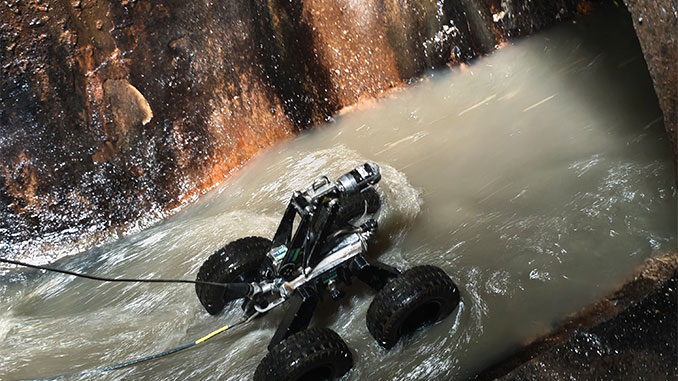

Drainage contractors and surveying companies may use the same CCTV technology to inspect underground pipes, but their surveys do not always deliver the same level of detail. Their purpose, scope and final outputs can differ significantly.
A drainage contractor’s survey usually focuses on finding and fixing an immediate issue. By contrast, a Surveyor-Led CCTV drainage survey provides accurate, coordinated data to support planning, design, construction and long-term asset management.
This distinction matters when commissioning a survey, especially where the findings will inform a major property, development or infrastructure decision.
What Does a Drainage Company Typically Provide?
Drainage companies are typically contacted when a problem has occurred. In these cases, the contractor’s priority is usually to find the cause, recommend cleaning or repairs, and restore the system to working order.
The CCTV inspection may focus only on the affected pipe section rather than the full drainage network. Depending on the contractor and agreed scope, the customer may receive video footage, photographs or a brief condition report outlining the issue and recommended remedial work.
This kind of inspection can be suitable when the aim is simply to diagnose and repair a local drainage fault. However, it may not provide all the information an engineer, architect, developer or project manager needs.
Drainage companies differ widely. Some offer detailed surveying services, while others focus mainly on cleaning, unblocking and repair. The key consideration is the proposed scope and deliverables, not the term “CCTV drain survey” alone.
How Is A CCTV Drainage Survey Different?
A CCTV drainage survey is treated as an engineering survey, not just a fault-finding exercise. Its purpose is to establish the drainage system’s condition, layout and location, then present the results as practical project data.
The process includes locating and accessing inspection chambers and manholes, lifting covers safely, and recording each chamber’s construction and condition. Surveyors can also measure invert depths and pipe diameters, identify materials, connections and flow directions, and inspect full drainage runs using specialist CCTV equipment.
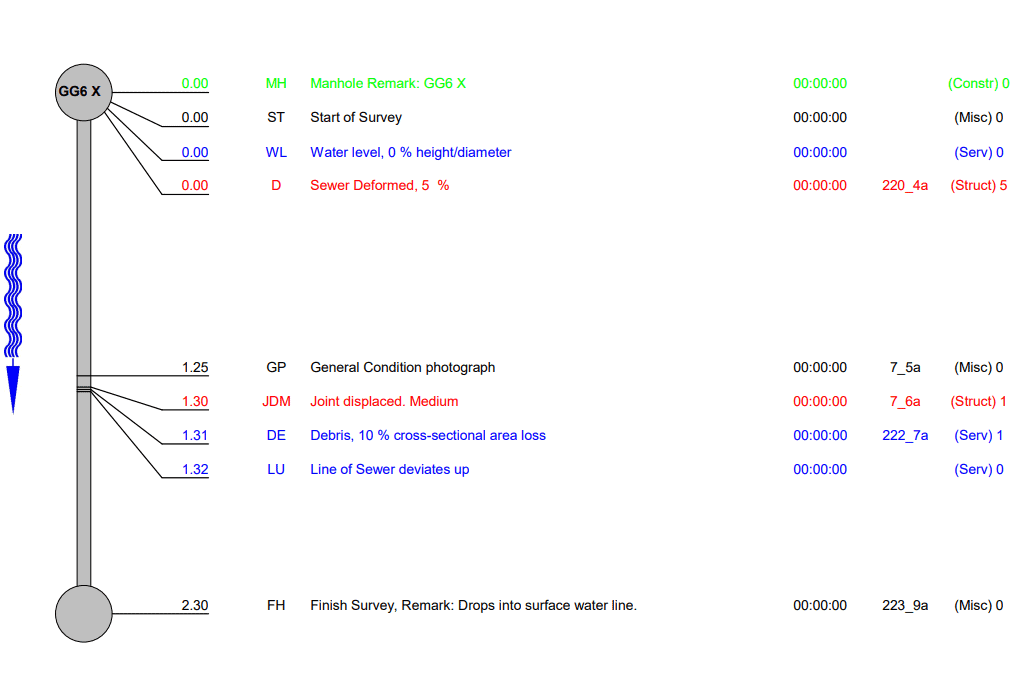
The inspection can record structural and service-related defects, including cracks, displaced joints, deformation, blockages and root ingress. The drainage network can then be mapped and presented in a detailed condition report. Where needed, this information can be coordinated with an existing or new topographical survey to give a fuller view of the underground network.
The Main Difference Is the Purpose of the Survey
A useful way to understand the distinction is to consider the question each service is intended to answer. A drainage company’s inspection will often seek to establish why a drain is not working properly and what must be done to fix it. A Survey Solutions CCTV drainage survey seeks to establish where the drainage network is located, how it is connected, what condition it is in and how it could affect the proposed project.
The first question is primarily operational. The second is operational, spatial and strategic. For a homeowner dealing with a blocked drain, a focused contractor inspection may be enough. For a development, refurbishment, utility diversion or infrastructure project, the design team will usually require much more comprehensive information.
Accurate Drainage Mapping Matters
CCTV footage can show the inside of a pipe, but footage alone does not necessarily tell the project team exactly where that pipe is situated in relation to buildings, boundaries, utilities or proposed construction work.
Survey Solutions can integrate drainage findings with topographical and underground utility survey data. The drainage system can therefore be viewed within its wider site context. This helps designers understand where drainage runs cross a proposed development area, which chambers and pipes may need to be retained or diverted, and whether existing connections and outfalls can be confirmed.
The coordinated data can also highlight where defects might create a construction or operational risk, how the drainage relates to site levels and nearby structures, and whether further investigation, cleaning or remediation may be required. Instead of receiving isolated footage, the client receives information that can be incorporated into the wider project.
Reporting Designed for Professional Use
The value of a CCTV drainage survey lies not only in the site investigation but also in the quality of the resulting data. A brief contractor report may be sufficient for arranging a repair. However, consultants and construction professionals often require clearly referenced findings, drainage mapping, chamber information and a structured record of defects.
Survey Solutions provides an in-depth visual inspection and comprehensive condition reporting to help clients make evidence-based decisions. The resulting information can support architects, engineers, developers and contractors throughout feasibility, design, construction, handover and ongoing maintenance.
This level of survey can be particularly valuable during site acquisition and due diligence, planning and feasibility studies, new developments, building extensions, refurbishment projects and drainage design. It can also assist with utility coordination, pre-construction risk reduction, asset records and planned maintenance programmes.
Understanding The Wider Project Objective
A drainage contractor may inspect a system before recommending jetting, cleaning or repair work. This does not automatically create a conflict, and many drainage contractors provide valuable and professional advice. Nevertheless, clients should understand whether they are commissioning a repair-led inspection or a wider engineering survey.
Survey Solutions begins with the project’s information requirements. Where defects or blockages are identified, appropriate maintenance or remedial action can then be recommended. High-pressure jetting, de-scaling, grease removal and root cutting may also be used where necessary to clear the system and allow a full inspection to be completed.
The important difference is that cleaning or repair is not the only objective. The survey is intended to establish reliable information about the complete drainage network and provide data that can be used by the wider project team.
Which Type of Survey Do You Need?
Survey Solutions offers two levels of drainage survey. A local fault diagnosis is suitable for urgent blockages, overflowing drains, slow-running drains, or similar issues, and is comparable to the level of detail typically provided by a drainage contractor. A comprehensive CCTV drainage survey is more appropriate when construction or redevelopment is planned, drainage routes and connections need to be confirmed, or the findings will be used by a professional design team. It is also suitable when drainage data must align with a topographical or utility survey, when a detailed condition assessment is needed, or when unknown drainage could create cost, programme, or safety risks.
Before selecting the level or survey required, it is important to ask exactly what the proposed service includes. Clients should establish whether every accessible chamber will be investigated, whether invert depths, pipe sizes and flow directions will be recorded, and whether the drainage network will be accurately mapped. They should also confirm what reports, and digital deliverables will be supplied and whether the results can be coordinated with other survey information.
The answers to these questions will reveal far more about the service than its title alone.
CCTV Drainage Report
More Than a Look Inside the Drain
Both drainage contractors and engineering surveyors have important roles. The difference lies in what the client is looking to achieve.
If the objective is to understand an underground drainage network and use that information to support design, construction or asset management, a comprehensive CCTV drainage survey provides a broader and more coordinated service.
It transforms camera footage into practical project intelligence, helping teams reduce uncertainty, identify risks and make better-informed decisions before work begins underground.
For more information on CCTV drainage surveys or request a quotation complete the form below.